Slab Leak Detection & Repair in Newport Beach, CA — Found Before Your Floor Is Opened
About 61% of Newport Beach homes were built before 1980, most of them on concrete slabs with copper water lines run underneath. Five decades later that copper is thin, the sandy soil beneath it shifts, and the water running through it is mildly alkaline — pH 8.5 on the City of Newport Beach's 2024 Water Quality Report. The result is the signature Newport Beach plumbing failure: a pinhole leak under the slab, silently soaking the ground beneath your home while the only evidence shows up as a warm spot on the floor, a water bill that doubles for no reason, or a damp patch that never dries. Our approach is the opposite of exploratory demolition: electronic and acoustic detection pinpoints the leak to a small section first, and only then does anyone open the floor — once, in the right place.
7 Signs You May Have a Slab Leak
A slab leak rarely announces itself with a visible puddle — the leak is under concrete, so the water goes into the ground first. Watch for these signs, especially in a pre-1980 slab home, and call if two or more show up together:
- A warm or hot spot on the floor — the classic sign of a hot-water line leaking under the slab. Walk barefoot across the room: a patch of floor that is noticeably warmer than the rest is not the sun, it is a leak.
- A water bill that jumps for no reason — usage doubles or triples with no change in household habits, no guests, no new irrigation. Check the meter: if the dial moves with every tap in the house shut off, water is going somewhere it should not.
- Damp, warped, or buckling flooring — tile grout darkening, laminate cupping, carpet that stays damp in one spot, or a baseboard pulling away from the wall where moisture is wicking up.
- The sound of running water when nothing is on — a faint hiss or rush from under the floor or inside a wall, heard best at night when the house is quiet.
- Low water pressure, or hot water that runs out faster than it used to — a leak bleeds pressure and volume before the water ever reaches the fixture.
- Mildew, musty smells, or mold in one area — persistent dampness under a slab feeds mold in flooring and baseboards long before it is visible.
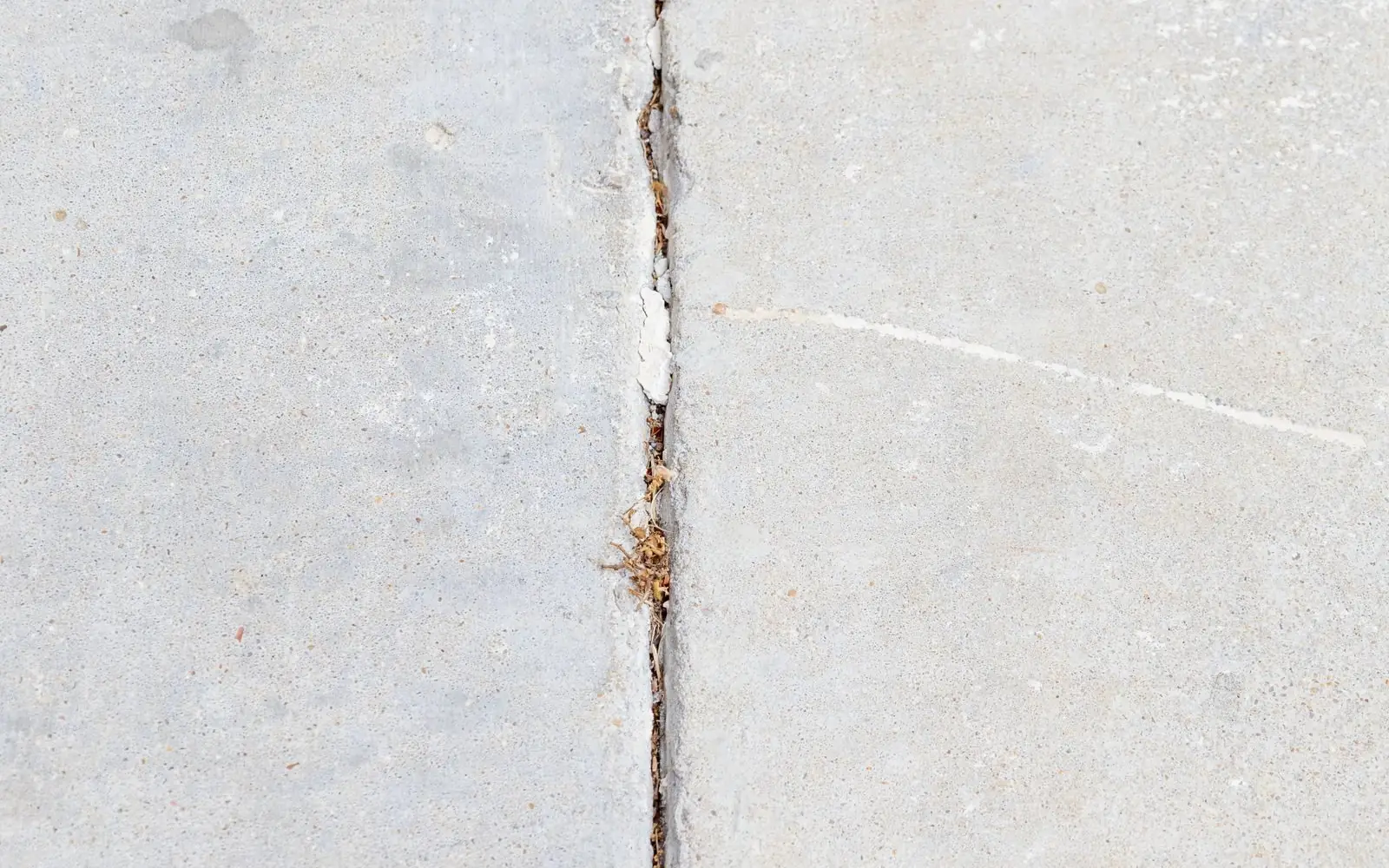
- Cracks in the slab, walls, or driveway near the leak's path — a long-running leak washes fines out of sandy soil, the ground settles unevenly, and the slab above it moves. A crack alone is not a diagnosis, but a crack plus a high bill is a detection call.
If water is actively flooding a room, shut off the house main and call — that is an emergency plumber call, day or night. If the signs are subtle, the meter test above is your fastest free check: shut off every tap and appliance, watch the meter for 15 minutes, and if it moves, you have a leak somewhere in the system.
How Detection Actually Works — No Guessing, No Exploratory Demolition
The worst slab leak repair is the one that starts with a jackhammer and a guess. A crew that opens three holes looking for a leak has already cost you three floor repairs — and still has not proven the leak is in any of them. Detection-first work uses several methods together, because each one answers a different question:
Acoustic Listening
Pressurized water escaping a pinhole makes a distinct sound, and sensitive ground microphones and listening discs pick it up through the slab. The technician maps the loudest point, which usually sits within a couple of feet of the actual leak — the starting point for everything else.
Electronic Line Tracing
A signal is induced on the copper line and traced from above the slab, mapping exactly where each run travels under your floor. This matters because the as-built drawings for a 1960s tract home, if they exist at all, are often wrong — and you cannot repair a line you cannot find.
Thermal Imaging
An infrared camera reads the floor's surface temperature, and a hot-water leak shows up as a warm plume spreading from the break. It is fast, non-invasive, and especially useful on tile and stone, where a warm spot can be hard to feel by foot.
Pressure Testing & Isolation
Each line is isolated and pressure-tested separately — hot versus cold, and branch by branch — so we prove which line leaks before we prove where. A whole-house pressure drop tells you there is a leak; isolation tells you which system it is in, which narrows the search from the whole house to one run.
No single method is proof on its own. A credible detection report uses at least two methods that agree — acoustic location confirmed by thermal imaging, for example, or line tracing confirmed by pressure isolation — and then marks one spot on the floor. That mark is where the floor opens. If a company wants to open your floor on the strength of a single guess, get a second opinion first.
Repair Options — Point Repair, Reroute, or Repipe?
Finding the leak is half the job. Choosing the right fix depends on the age and condition of the copper around it, and an honest contractor will price all the options that genuinely apply:
Point Repair (Spot Repair)
Open the floor once at the marked location, cut out the failed section, and splice in new copper. Right when the rest of the line is sound and this is the first leak. Wrong when the copper is failing throughout — a second leak six months later in the next room means the point repair bought time, not a solution.
Reroute (Bypass)
Abandon the leaking under-slab run and run a new line overhead through walls or the attic to the same fixtures. No slab cutting at all, and it removes that run from the ground permanently. The trade-off is visible routing and access work, and it makes most sense when the leaking run feeds a single bathroom or kitchen.
Partial Repipe
Replace the failing system — usually the hot-water distribution, which fails first — while leaving sound cold lines in place. A middle path for homes where one system is done and the other still has life in it.
Whole-House Repipe
Replace all under-slab copper with new lines routed overhead or through walls. The right answer when leaks are recurring, the copper is thin throughout, or the home has already had two or more slab leaks. It is the biggest job and the biggest check — but it is also the last slab leak you will ever have, and it is the option a seller's inspector most wants to see documented. See our repiping overview for the full picture.
The decision rule we use, and you can use with any contractor: one leak in otherwise sound copper is a point repair or a reroute. Two or more leaks, or copper that tests thin in multiple places, is a repipe conversation — and any contractor who recommends a repipe after a single leak, or a point repair after the third, should have to show you the evidence for it.
Slab Leak Pricing — Published, Flat, In Writing
Typical Newport Beach ranges. Your exact flat-rate quote is written and signed before work begins, after detection confirms the location.
| Slab leak job | Typical Newport Beach range |
|---|---|
| Slab leak detection (electronic + acoustic, with report) | $350–$750 |
| Point repair, single location (including floor patch) | $1,500–$4,000 |
| Reroute, single run (overhead, no slab cutting) | $2,000–$5,000 |
| Partial repipe (hot-water system) | $5,000–$12,000 |
| Whole-house repipe | $10,000–$25,000+ depending on size and finish |
| Floor restoration beyond basic patch (tile/stone matching) | quoted per job |
Ranges are typical-market figures for planning. Floor finish is the variable most quotes understate: a basic concrete patch is one price, matching 1960s tile or wide-plank hardwood is another, and a written quote should say which one it includes. Detection is credited toward the repair when we do both — ask any contractor whether theirs is, because a detection fee that vanishes into a repair quote and one that stacks on top of it are very different prices.
How a Slab Leak Job Works With Us
1. Meter check & isolation
Confirm the leak exists and which system it is in — hot or cold, and which branch — before any equipment comes out. This step alone eliminates a large share of false alarms (a running toilet and an irrigation leak both mimic slab-leak bills).
2. Detection & marking
Acoustic location, line tracing, and thermal imaging, with at least two methods agreeing, and one mark on the floor. You get the detection report in writing, with the location and the evidence behind it.
3. Written options, priced side by side
Point repair, reroute, and — where the evidence supports it — partial or whole-house repipe, each priced in writing, including floor restoration. If only one option is honest for your pipe, we say so and show you why.
4. Repair & verification
Open once, repair, pressure-test the repaired line to prove it holds, and patch the floor. Before we leave, the meter test runs again with everything off — a still meter is the proof the leak is gone, not a promise that it is.
Slab Leaks Across Newport Beach
Newport Heights & Dover Shores · 92660
The epicenter: 1950s–60s slab tracts with original under-slab copper. This is where our detection crew spends most of its week, and where a second leak in the same house is common enough that the repipe conversation starts early.
West Newport · 92663
1960s–70s slab blocks near the Santa Ana River mouth — original copper, sandy soil that shifts, and several streets low enough that slab moisture and tide moisture get confused. Detection separates the two before anyone cuts concrete.
Balboa Peninsula · 92661
Cottages and duplexes on slabs, many with additions whose plumbing history is undocumented. Line tracing matters more here than anywhere, because nobody knows where the 1978 addition's lines actually run.
Balboa Island · 92662
Small lots and small rooms, where a warm spot on the floor is noticed fast — and where a reroute through a tight attic is often cheaper than opening a floor finished in irreplaceable tile.
Corona del Mar · 92625
Flower Streets originals with high finish standards: the floor you open matters as much as the pipe you fix. Tile matching and restoration planning belong in the quote, not discovered afterward.
Newport Coast & Crystal Cove · 92657
Newer stock, so slab leaks are rarer — but larger homes mean longer runs, and a leak under a great room slab is a bigger floor repair. IRWD water territory, not City of Newport Beach, which changes paperwork on related work. Gated access handled.
Lido Isle · 92663
Gated island homes, many of them second homes — a slab leak in an empty house runs until someone notices the bill or the floor. Pair detection and repair with a leak sensor and automatic shutoff before the next vacancy.
Slab Leak FAQs — Newport Beach
How do I know if I have a slab leak?
The classic signs are a warm spot on the floor, a water bill that jumps with no change in use, damp or buckling flooring, the sound of running water when nothing is on, and low pressure. The free check: shut off every tap and appliance, watch your water meter for 15 minutes — if it moves, water is going somewhere it should not, and detection is the next step.
Can you find a slab leak without tearing up my floors?
Yes — that is the whole point of electronic and acoustic detection. Listening equipment, line tracing, and thermal imaging locate the leak to a small section before any floor is opened, and the floor is then opened once, in the right place. A crew that starts with a jackhammer and a guess is not doing detection.
How much does slab leak repair cost in Newport Beach?
Detection typically runs $350–$750, and a single-point repair $1,500–$4,000 including the floor patch. A reroute runs $2,000–$5,000, a partial repipe $5,000–$12,000, and a whole-house repipe $10,000–$25,000+ depending on size and finish. Every job is quoted in writing after detection, with floor restoration stated in the quote.
Should I repair the leak or repipe the whole house?
One leak in otherwise sound copper is a point repair or a reroute. Two or more leaks, or copper that tests thin in multiple places, is a repipe conversation. Any contractor who recommends a full repipe after a single leak — or a point repair after the third — should have to show you the evidence for it.
Why are slab leaks so common in Newport Beach?
About 61% of Newport Beach homes were built before 1980, most on concrete slabs with copper water lines underneath. After five decades, that copper thins, the sandy soil shifts, and the mildly alkaline water (pH 8.5 per the city's 2024 Water Quality Report) keeps working on it. It is an age-and-materials problem, not a maintenance failure — and it is why detection-first work matters so much here.
Does homeowners insurance cover a slab leak?
Often, partially: many policies cover the resulting water damage and sometimes the access to the leak, but not the pipe repair itself — and terms vary widely. Document everything (the detection report, photos, the meter readings), notify your insurer early, and get the repair quote in writing before authorizing work. We provide the documentation insurers ask for; coverage itself is between you and your carrier.
Found First. Opened Once. Repaired Right.
Warm floor, high bill, damp patch that never dries — get the location before anyone opens your floor. Serving every Newport Beach neighborhood.
☎ Call (949) 693-0223