Hydro Jetting in Newport Beach, CA — Scour the Line Clean, Not Just Clear
A cable punches a hole through a clog. Hydro jetting scours the pipe wall back to near-original diameter — grease stripped, scale blasted off, roots cut out and flushed away. In a city where about 61% of homes were built before 1980, with cast-iron and clay lines that have been narrowing for decades, that difference is the difference between a drain that stays clear and one that clogs again in six months. Every jetting job here starts with a camera, so we know the pipe can take the pressure before we ever turn it on.
What Hydro Jetting Actually Does
Hydro jetting sends water through a specialized nozzle at pressures up to 4,000 PSI, with jets angled both forward and backward. The forward jets break up the blockage; the rear jets propel the nozzle down the line and scour the pipe wall as it retreats. The result isn't a hole through a clog — it's a clean pipe, wall to wall. Compare that with a drain cable, which drills a channel roughly the width of the cable head and leaves the rest of the buildup exactly where it was.
That distinction matters most in Newport Beach's older pipes. A cast-iron kitchen line that has carried grease for forty years doesn't have a single clog — it has a lining of hardened grease and scale that has narrowed the bore by a third or more. A cable restores a trickle of flow and the line clogs again at the next heavy use. Jetting strips the lining off, and the line flows like it did when it was installed.
1. Camera first, always
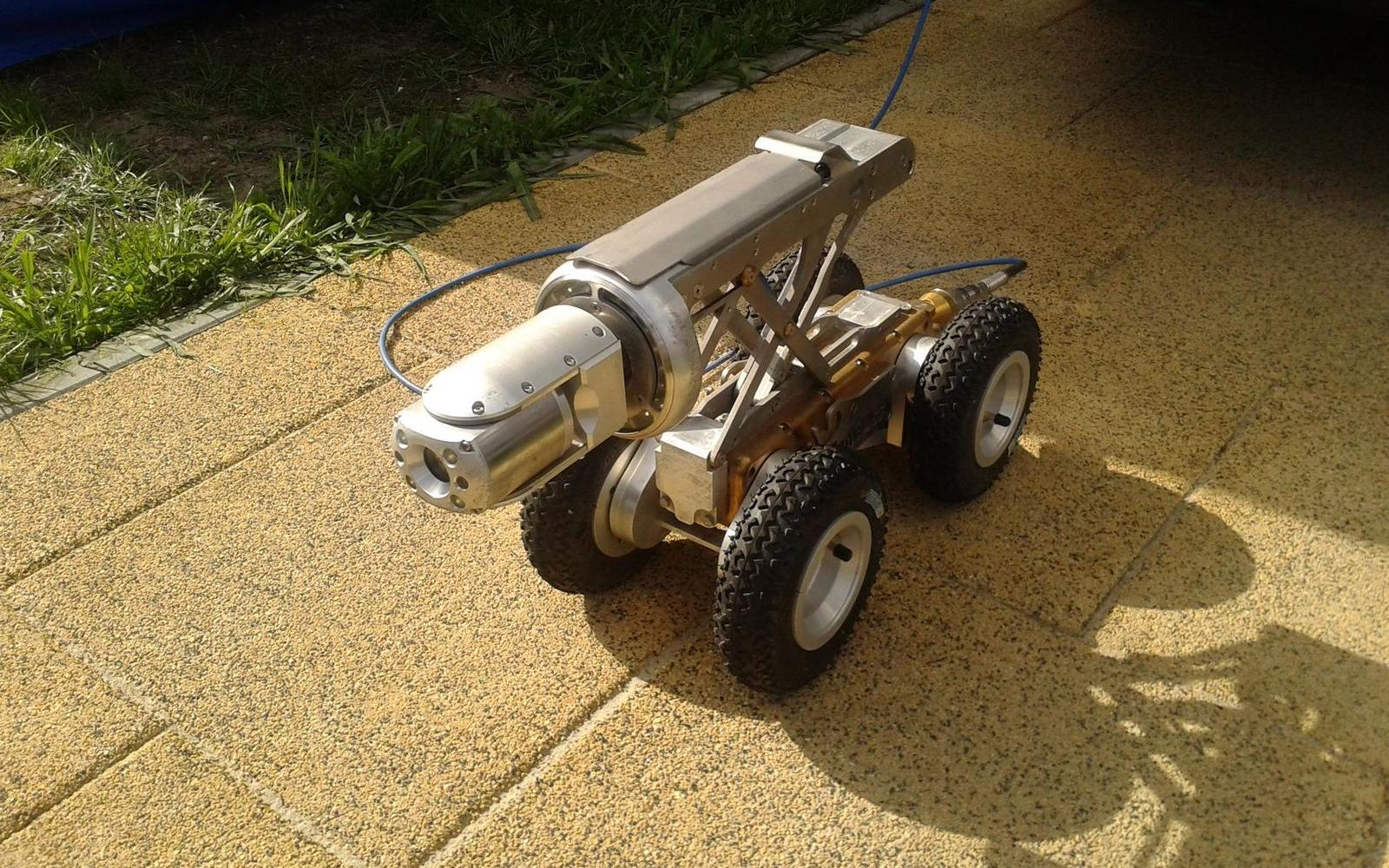
We run a camera before jetting — every time, no exceptions. The footage tells us what we're dealing with (grease, scale, roots, a belly, a break) and whether the pipe is sound enough for high-pressure water. Jetting a collapsed or badly cracked line would make it worse; the camera is what keeps that from happening.
2. Match pressure and nozzle to the pipe
Grease in a kitchen line, scale in a cast-iron main, roots in a clay lateral — each gets a different nozzle and pressure. A root-cutting nozzle spins; a grease nozzle fans wide. Older or fragile pipe gets lower pressure and a gentler pass. There is no one-size jetting setting, and anyone who uses one is guessing.
3. Jet, flush, and prove it
The nozzle works the full length of the line, and the debris is flushed out to the sewer — not pushed deeper. Then we camera again, and you watch the after-footage: clean pipe wall, full diameter, water running free. That's the receipt.
4. Quote the real fix if the camera finds one
Sometimes jetting reveals the underlying problem: a cracked clay joint, a collapsed section, a belly that will keep collecting debris. If so, we price the repair in writing — a sewer lateral repair or replacement in Newport Beach typically runs $3,000–$15,000 depending on depth, length and method — with the footage to back it up.
What Hydro Jetting Clears — and What It Can't
Kitchen Grease
The number-one jetting job in Newport Beach. Grease cools, coats cast iron and galvanized pipe, and hardens into a lining that a cable can't remove. Jetting strips it back to bare pipe — the only method that actually resets a grease-clogged line instead of poking through it.
Scale & Mineral Buildup
Newport Beach water runs moderately hard — about 160 ppm, or 9.4 grains per gallon, per the city's 2024 Water Quality Report. Over decades that hardness deposits scale inside older lines, narrowing them from the inside out. High-pressure water blasts scale off the wall where a cable just skates over it.
Tree Roots
Clay laterals leak a little water at every joint, and roots follow it. A root-cutting jetting nozzle slices roots out and flushes them away — but roots grow back, typically within 12–18 months. Jetting manages roots; it doesn't cure them. If the camera shows a badly broken joint, repair — not another jet — is the honest recommendation.
Beach Sand & Silt
Peninsula and Island homes track sand into showers and laundry constantly, and sand settles in low spots and flat laterals. Jetting flushes settled sand and silt out of the line; a cable just stirs it around and lets it settle again downstream.
Recurring Main-Line Clogs
If your main line clogs every few months, the cause is almost never a single blockage — it's a narrowed, rough, or root-invaded pipe. Jetting restores the full bore, which is why a jetted main typically stays clear far longer than a snaked one.
What Jetting Can't Fix
A collapsed pipe, a fully broken clay section, or a severe belly (a sagging section that holds standing water) won't be fixed by water pressure — and jetting a collapsed line can worsen it. That's exactly why the camera goes in first. If the pipe is structurally failed, we say so and price the repair instead of selling you a jet you don't need.
Hydro Jetting vs. Snaking: An Honest Comparison
Snaking has its place — we use cables every day. But the two methods do different jobs, and a company that only offers one will sell you that one regardless of what your line needs.
| Snaking (cable) | Hydro jetting | |
|---|---|---|
| What it does | Punches a channel through the clog | Scours the full pipe wall clean |
| Best for | Hair clogs, simple soft blockages, one-off branch clogs | Grease, scale, roots, sand, recurring clogs, main lines |
| How long it lasts | Weeks to months on a buildup problem | Typically 1–3 years on the same line, depending on cause |
| Camera required | Recommended on mains | Always — before and after |
| Risk to old pipe | Low, but can snag and damage badly corroded pipe | Low when pressure is matched to the pipe — which is why we camera first |
| Typical Newport Beach range | $125–$650 depending on line | $450–$950 depending on line and blockage |
The honest rule: a simple hair clog in a bathroom branch doesn't need jetting, and we'll tell you so. A grease-lined kitchen main or a root-blocked clay lateral does — and snaking it three times a year costs more than jetting it once.
Hydro Jetting Pricing — Published, Flat, In Writing
Typical Newport Beach ranges, camera inspection included. Your exact flat-rate quote is written and signed before work begins.
| Hydro jetting job | Typical Newport Beach range |
|---|---|
| Kitchen line jetting (grease & scale) | $450–$750 |
| Main line jetting + camera before & after | $550–$950 |
| Root cutting + jetting + camera verification | $600–$950 |
| Branch drain clearing (cable, single fixture) | $125–$275 |
| Main line clearing + camera inspection (cable) | $295–$650 |
| Sewer lateral repair or replacement (if the camera finds damage) | $3,000–$15,000 depending on depth, length and method |
Ranges are typical-market figures for planning, confirmed against the job in front of us before you commit. If the camera shows damage that jetting can't fix, we stop and re-quote — you never get a surprise invoice.
When to Call for Jetting — and When to Call for Something Else
Jetting is the right call when a drain keeps coming back, when a main line is slow throughout the house, or when a camera has already shown grease, scale or roots. It's also the right preventive move before a big event: a rental turnover, a holiday with a full house, or the king-tide windows of Oct 26–28 and Nov 24–26, 2026, when low-lying laterals are under the most stress.
Call for something else — a camera inspection first, or emergency service — if sewage is coming up through any fixture, if multiple fixtures back up at once and water is rising, or if a drain has never been cameraed and you suspect a break. In those cases the diagnosis comes first, and our drain cleaning and 24/7 emergency plumber pages cover what happens next.
One more note for older homes: if your house still has its original cast-iron or galvanized drains, ask us about the pipe's remaining life while we're on site. Jetting buys years on a sound old line — but if the camera shows the pipe wall itself is failing, a whole-house repipe may be the cheaper long-term answer, and we'll say so plainly rather than jet a dying pipe every year.
Hydro Jetting Across Newport Beach
Balboa Peninsula · 92661
Sand-choked shower and laundry lines, rental turnover grease, tide-stressed laterals. Jetting is the workhorse here — it flushes sand out instead of stirring it deeper.
Balboa Island · 92662
Clay laterals with root intrusion at every joint, plus dock-adjacent lines. Root-cutting jetting on a schedule keeps Island mains flowing between repairs.
Newport Heights & Dover Shores · 92660
1950s–60s cast-iron mains narrowed by decades of grease and scale. This is where jetting shows its biggest difference over snaking.
Corona del Mar · 92625
Village cottages and Flower Streets originals: old galvanized and cast-iron lines that have never been jetted. First-time jetting on these lines often restores flow homeowners thought was gone for good.
West Newport · 92663
Older beach blocks near the Santa Ana River mouth; storm grit and sand in patio and floor drains, worst after storms and high tides.
Newport Coast & Crystal Cove · 92657
Newer systems, but 1990s–2000s homes are hitting their first major grease and root problems — and IRWD water territory, not City of Newport Beach, which matters for any related backflow paperwork.
Lido Isle · 92663
Waterfront lots with ejector and dock-line drains alongside kitchen and bath mains; jetting keeps the whole island system moving.
Hydro Jetting FAQs — Newport Beach
How much does hydro jetting cost in Newport Beach?
Hydro jetting typically runs $450–$950 in Newport Beach — $450–$750 for a kitchen line and $550–$950 for a main line with camera inspection before and after. Root cutting with jetting and camera verification is $600–$950. Your exact price is quoted in writing before work starts.
Is hydro jetting safe for old cast-iron and clay pipes?
Yes, when it's done right — and "done right" means camera-inspecting first and matching pressure and nozzle to the pipe's condition. A sound cast-iron or clay line handles jetting fine. A collapsed or badly cracked line doesn't, which is exactly why we never jet blind. If the camera shows structural failure, we recommend repair instead.
How is hydro jetting different from snaking?
Snaking punches a channel through a clog; jetting scours the entire pipe wall clean. On a grease, scale or root problem, snaking restores partial flow that clogs again in months, while jetting restores near-original diameter and typically keeps the line clear for 1–3 years. On a simple hair clog, snaking is plenty — and cheaper.
How long does hydro jetting take?
Most residential jetting jobs take 1–2 hours including the before-and-after camera inspections. A long or heavily root-blocked main can take longer. You'll see the after-footage before we leave, so you know the line is actually clean.
Will roots just grow back after jetting?
Yes — jetting cuts roots out but doesn't seal the clay joint they entered through, so roots typically return within 12–18 months. For lines with heavy root intrusion, scheduled jetting manages the problem; a repair or replacement of the damaged section is the permanent fix, and the camera footage will show which one your line needs.
Do I need hydro jetting, or will a regular drain cleaning do?
If it's a first-time, single-fixture clog, a regular cable clearing is usually enough. If the same drain clogs repeatedly, if the whole house is slow, or if a camera has shown grease, scale or roots, jetting is the right tool. We'll camera first and tell you honestly which one your line needs — including when the cheaper option will do.
Stop Clearing the Same Drain. Clean the Pipe.
Camera first, flat rate in writing, and a line scoured clean wall to wall — not just punched through. Serving every Newport Beach neighborhood.
☎ Call (949) 693-0223