Repiping in Newport Beach, CA — When the Pipes Themselves Are the Problem
One pinhole leak is bad luck. The second one is a warning, and the third is a pattern. About 61% of Newport Beach homes were built before 1980, and their water lines — galvanized steel and early copper — are now past the age they were designed to last. A whole-house repipe replaces those failing lines with new PEX or copper, in a planned job with a written price, instead of a string of emergency leak calls that cost more and wreck more drywall.
The Signs Your Home Needs Repiping — Not Another Repair
Most Newport Beach repipes start the same way: a homeowner calls about a leak, we fix it, and six months later there's another one in a different wall. Each repair is cheap on its own. Together, they cost more than the repipe would have — and every one of them risks water damage, mold, and a ruined floor. Here's how to tell which side of that line you're on:
- Two or more pinhole leaks in 12–18 months. Pinholes in copper mean the pipe wall is thinning throughout the system, not just at the leak. The next one is already forming.
- Discolored water — rusty, brown, or yellow. Galvanized steel corrodes from the inside. Rust-colored water, especially first thing in the morning, means the pipe interior is shedding corrosion into your drinking water.
- Water pressure that keeps dropping. Corrosion and scale narrow galvanized and copper lines from the inside. If pressure has faded gradually over years, the pipes — not the fixtures — are the bottleneck. Note that Newport Beach water is moderately hard (about 160 ppm, 9.4 grains per gallon per the city's 2024 Water Quality Report), which accelerates scale in older lines.
- Visible corrosion or green staining on exposed pipe. Green-blue crust on copper fittings, flaking on galvanized runs in the garage or crawlspace — that's the pipe telling you its condition.
- A slab leak you already fixed once. A slab leak repair fixes one section. If the rest of the under-slab copper is the same age and the same water has run through it, a repipe — often with lines rerouted overhead — is frequently the smarter spend than a second or third slab opening.
- Your home is pre-1980 and still on original lines. Galvanized steel typically lasts 40–50 years; copper 50–70. A 1960s home on original galvanized is past design life on every foot of pipe, whether it has leaked yet or not.
If you're seeing one of these signs, a pressure test and a look at your exposed piping will tell us where you stand — usually in a single visit, with no obligation to repipe if the pipes still have life in them.
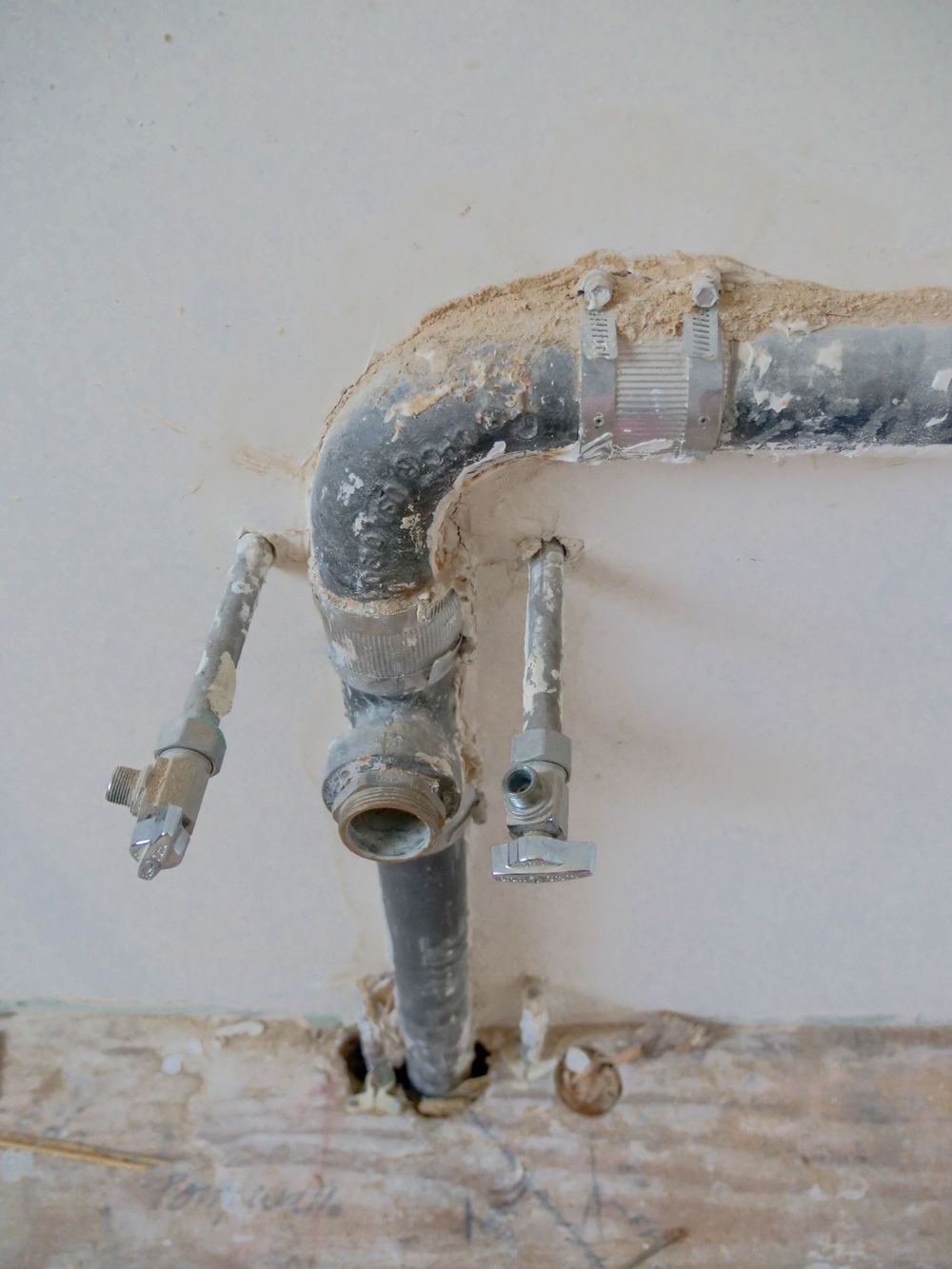
PEX vs. Copper: What We Recommend and Why
There is no universally "best" repipe material — there's the right one for your home, your water, and your budget. Here's the honest comparison we give every homeowner:
PEX (Cross-Linked Polyethylene)
Flexible tubing that snakes through walls with far fewer joints and far fewer wall openings. Faster install, lower cost, quieter (no water hammer), and resistant to the scale and corrosion that killed your old lines. The standard choice for most Newport Beach repipes, and the one we'd pick for our own homes in most cases.
Copper (Type L)
The traditional premium option: rigid, proven for decades, and familiar to every future plumber who touches the house. Costs more and takes longer to install — more joints, more openings, more patch work. Some homeowners choose it for resale perception or personal preference, and that's a legitimate reason.
What About Your Water?
Newport Beach water at 9.4 gpg is moderately hard — hard enough to scale old galvanized and copper over decades, but well within what both PEX and new copper handle. If scale is a concern for fixtures and appliances, a softener sized to the verified 9.4 gpg figure (not an inflated sales number) is a separate conversation, not a reason to pick one pipe over the other.
What We Won't Sell You
A partial repipe that leaves the worst lines in place, or a full repipe for a home whose pipes still have a decade of life. The scope is set from evidence — pressure readings, exposed-pipe condition, leak history — and priced in writing before we open a single wall.
What a Whole-House Repipe Actually Involves
Homeowners picture weeks of demolition. A modern repipe is much less disruptive than that, and knowing the sequence takes most of the fear out of it:
1. Scope and written price
We map every fixture, count every run, and inspect exposed piping and the water heater connections. You get a written scope — material, fixture count, what's included, what isn't — and a flat price. No hourly meter running while walls are open.
2. New lines run, old lines left in place
New PEX or copper is run through attics, walls and crawlspaces alongside the old system. The old lines are capped and abandoned in place — nobody tears your walls apart to remove them. Most homes need a modest number of access openings, typically behind fixtures and in closets, not across every wall.
3. Changeover in a day
Once the new system is pressure-tested, we switch the house over — usually in a single day, with water off for hours, not days. You can typically stay in the home throughout the job, and most repipes finish in 2–5 days depending on home size.
4. Patch coordination
Drywall patching is coordinated as part of the job — we don't leave you with open walls and a contractor hunt. Final texture and paint are confirmed in the written scope, so there's no argument at the end about whose job the finish work was.
One practical note for slab homes: in many Newport Heights, Dover Shores and Eastbluff slab homes, the new lines are routed overhead through the attic rather than back under the slab. That costs a little more in material and takes a little longer — but it means the next leak, if one ever comes, is in an accessible attic run, not under concrete. Ask us about the routing on your home specifically; it changes the price and it's worth understanding.
Repiping Pricing — Published, Flat, In Writing
Typical Newport Beach ranges. Your exact flat-rate quote is written and signed after a site visit — fixture count, home size, material and routing all move the number, and we'll show you exactly how.
| Repipe job | Typical Newport Beach range |
|---|---|
| Whole-house PEX repipe, 2-bath home | $6,000–$12,000 |
| Whole-house PEX repipe, 3–4 bath home | $10,000–$18,000 |
| Whole-house copper repipe (same sizes) | Typically 30–50% above PEX |
| Partial repipe (one bathroom or one run) | $2,000–$5,000 |
| Slab-line reroute to overhead (often part of a repipe) | $1,500–$4,000 per line |
| Single pinhole leak repair (point repair, not a repipe) | $350–$900 |
Ranges are typical-market figures for planning, confirmed against your home before you commit. Compare honestly against the alternative: three emergency leak calls with drywall repair commonly run $2,500–$5,000 combined — and the pipes that caused them are still in your walls.
Repiping vs. Repairing: The Math That Decides It
Repair wins when the pipe is otherwise sound — one isolated leak, good pressure, clean water, no corrosion elsewhere. Repipe wins when the failures are systemic: multiple leaks, falling pressure, discolored water, or a home past design life on its original lines. The tipping point most homeowners recognize in hindsight is the second leak in a year; by the third, they've usually spent close to a repipe's down-payment equivalent in repairs and damage.
There's also a timing argument unique to Newport Beach: second homes and rentals. An unattended leak in a vacant home runs until someone notices — and roughly half of Newport's vacant homes are second homes. If you own a home you don't live in full-time, a repipe plus an automatic shutoff valve is the combination that lets you stop worrying about it. See also our leak detection page for how electronic detection fits into the picture before a repipe decision.
And if you're buying or selling: a documented repipe is one of the few plumbing items that shows up cleanly in a disclosure and an inspection report. Pre-1980 homes with original galvanized lines routinely draw inspection flags; a home with a permitted, documented PEX or copper repipe doesn't.
Repiping Across Newport Beach
Newport Heights & Dover Shores · 92660
The repipe capital of the city: 1950s–60s slab homes on original galvanized and copper. Overhead reroutes are common here, and we do more repipes in this ZIP than anywhere else.
Corona del Mar · 92625
Village cottages and Flower Streets originals with galvanized lines and tight access. Repipes here are smaller jobs — but the access and patch work takes care, and that's priced in, not discovered later.
Balboa Peninsula · 92661
Salt air accelerates corrosion on exposed runs, and rental turnover hides leak history. Peninsula repipes often pair with fixture upgrades during the same opening.
Balboa Island · 92662
Narrow lots, dock-adjacent lines, and homes where every wall opening matters. PEX's flexibility is a real advantage in Island floor plans.
West Newport · 92663
Older beach blocks with mixed galvanized and copper — partial repipes are common here, replacing the worst runs first when a full repipe isn't yet justified.
Newport Coast & Crystal Cove · 92657
Newer homes rarely need full repipes, but 1990s systems with early polybutylene or failing copper are starting to appear — and IRWD territory paperwork differs from City of Newport Beach work.
Lido Isle · 92663
Waterfront homes where a leak's damage spreads fast and access is gated. Planned repipes beat emergency calls on the island every time.
Repiping FAQs — Newport Beach
How much does a whole-house repipe cost in Newport Beach?
A whole-house PEX repipe typically runs $6,000–$12,000 for a 2-bath home and $10,000–$18,000 for a 3–4 bath home in Newport Beach. Copper typically adds 30–50%. Your exact price is quoted in writing after a site visit, based on fixture count, home size, material and routing.
How long does a repipe take, and do I have to move out?
Most repipes finish in 2–5 days, and you can usually stay in the home. Water is off for hours during the changeover day, not days. New lines are run alongside the old system, so the house keeps running until the switch.
PEX or copper — which should I choose?
PEX is faster, cheaper, quieter and immune to the corrosion and scale that killed your old lines — it's the right choice for most Newport Beach homes. Copper costs more and takes longer but is the traditional premium material. Either is a sound repipe; the choice comes down to budget, preference and your home's layout.
How do I know if I need a repipe or just a repair?
One isolated leak in otherwise sound pipe: repair. Two or more pinholes in a year, falling pressure, discolored water, or a pre-1980 home on original lines: repipe. A pressure test and an inspection of your exposed piping will usually settle it in one visit.
Will repiping tear up my whole house?
No. New lines are run through attics, walls and crawlspaces with a modest number of access openings — typically behind fixtures and in closets — and the old lines are left capped in place, not ripped out. Drywall patching is coordinated as part of the job.
Does a repipe help with low water pressure?
Often, yes — if the cause is corroded or scaled pipes narrowing from the inside, which is common in pre-1980 galvanized and copper. If pressure is fine at the street but weak at fixtures, the pipes are the likely bottleneck, and a repipe restores full flow. We'll verify with a pressure test before recommending it.
Stop Paying for the Same Leak Twice.
A written scope, a flat price, and new lines that outlast the ones that keep failing. Get an honest read on your pipes — repipe or repair, whichever the evidence says.
☎ Call (949) 693-0223