
Second-Home Plumbing Protection: Automatic Shutoff Valves
A leak in an occupied home is noticed in an hour. The same leak in an empty second home can run for weeks. Automatic shutoff valves and leak sensors close that gap — here is how they work, what they cost, and what else an absent owner should arrange.
The Empty-Home Leak Problem
Newport Beach has a large stock of second homes, seasonal rentals and investment properties — bayfront condos, Peninsula cottages, Island homes and Newport Coast houses that sit empty for weeks or months at a time. That vacancy changes the arithmetic of plumbing failure completely. In an occupied home, a burst washing-machine hose or a failed water-heater fitting announces itself: water on the floor, a sound, a stain, someone home to close a valve. In an empty home, the same failure announces itself to nobody, and the damage grows with every hour the water runs. The pipe repair at the end is almost never the expensive part. The expensive part is everything the water touched while it ran: flooring, drywall, cabinetry, built-ins, stored contents, and the mold that follows once materials stay wet.
This is not a rare scenario in Newport Beach, and the local housing stock makes it worse rather than better. About 61 percent of the city's housing predates 1980, which means many second homes run on original or aging copper and galvanized lines, original angle stops under sinks and toilets, and water heaters that are older than their owners realize. Add the harbor climate — salt air corroding fittings, slab foundations hiding slow leaks, and seasonal homes whose systems sit unused for months and then get shocked back into service on arrival weekend — and the empty-home leak is less a freak accident than a predictable failure mode. The protection question is therefore not whether a second home deserves attention, but which combination of valve, sensors and local oversight matches how long the home sits empty and what is inside it.
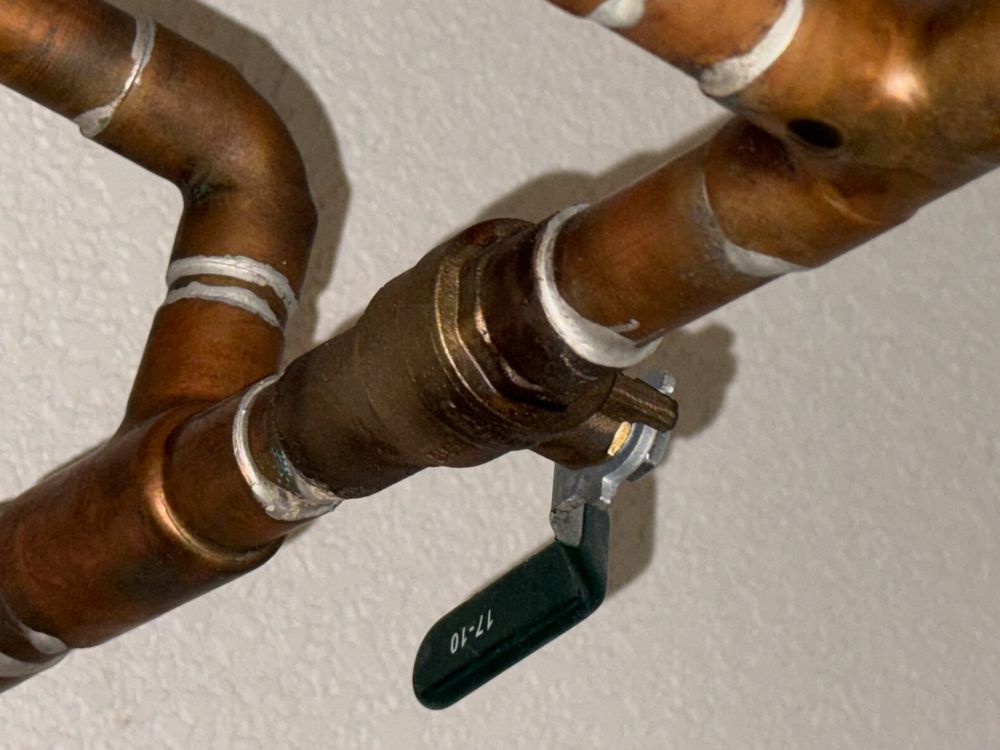
The honest starting point is a walk-through, not a product. Before any valve is quoted, the home needs its shutoff locations mapped, its angle stops and supply lines checked, its water heater age and anode condition noted, and its pressure read — high pressure accelerates every failure a valve is meant to catch, and a home running at 90 psi will eat fittings faster than one at 60. That inspection also settles the practical questions a valve installation depends on: where the main enters, whether there is room for a full-port valve, what stays pressurized when the owners are away, and who gets the alert when something trips. A valve installed without that survey is a gadget; a valve installed after it is a system.
How Automatic Shutoff Protection Actually Works
Flow-based whole-home valves
A metered valve on the main learns your normal usage, then closes the water when flow runs too long, too fast, or at a time nothing should run. Best for the classic empty-home disaster: a burst line or a fitting that lets go while nobody is there.
Sensor-based shutoff systems
Small water sensors sit under the heater, washer, dishwasher, sinks and toilets, and any sensor that gets wet signals the main valve to close. Best for slow leaks and appliance failures, where the water pools in one place before it spreads.
Point-of-use protection
Single-appliance valves and leak trays protect one risk at a time: a washer, a water heater, an ice-maker line. Cheaper per point, and a sensible add-on where one appliance worries you, but not a substitute for whole-home protection in a home that sits empty.
Smart monitors and alerts
Flow monitors report usage to your phone and flag anomalies — a toilet running overnight, a line drawing water at 3 AM. Alerts are only useful if someone can act on them, so pair them with a local contact or a valve that closes on its own.
Away mode and bypass windows
A properly commissioned system has an away mode with tight limits while you are gone, and scheduled bypasses for irrigation, pool autofill and housekeeping. Without those, legitimate flows get mistaken for leaks and the system gets disabled — which is worse than never installing it.
Power, internet and failure mode
Ask how the valve behaves with no power and no internet. Some close on power loss, which is the safe failure mode for an empty home. Others need both to alert, so battery backup and cellular notification are worth the premium for a home empty for months.
None of this replaces the basics, and a good installer will say so. A valve does not fix high pressure, it does not revive a failing water heater, and it does not inspect a slab line. What it does is bound the damage: a failure that would have run for three weeks runs for three minutes. For a second home, that bound is the entire value proposition, and it is why the valve, the sensors and the annual test matter as one package rather than as three separate purchases.
What Second-Home Protection Costs — and the Checklist Around It
Typical-market ranges for the protection options Newport Beach second-home owners actually buy. Every job is quoted in writing at a flat rate before work starts, and every valve installation includes commissioning: away mode set, bypass windows programmed, and the alert contacts tested.
| Option | Typical range | Best for |
|---|---|---|
| Whole-home automatic shutoff valve (flow-based) | $650–$1,500 installed | Homes empty for weeks or months; burst-line protection |
| Sensor-based shutoff kit (valve plus sensors) | $350–$900 installed | Appliance and slow-leak protection at key points |
| Smart water monitor (alerts, no auto shutoff) | $300–$700 installed | Owners with a local contact who can respond fast |
| Point leak sensors (each, with alarm) | $75–$200 | Single-risk spots: heater pan, washer, under-sink |
| Water heater auto-shutoff add-on | $250–$600 | Heaters over eight years old in an empty home |
| Pre-arrival and post-storm check visit | $150–$350 | Walk-through before owners arrive or after a storm or tide |
| Backflow test and city filing (NBMC 14.10) | $85–$175 | Required annually, and easy to forget for an absentee owner |
Ranges are typical-market figures for planning. Homes with pool autofill, irrigation controllers or recirculation lines need those flows mapped during commissioning so they are not mistaken for leaks.
The pre-departure checklist that goes with the valve is short and worth taping inside a utility door. One, confirm the valve is in away mode and the alert contacts are current. Two, know where the manual main shutoff is and that it turns — a seized main valve is a common discovery during an emergency, and it is a cheap fix on a routine visit. Three, set the water heater to vacation mode or the manufacturer's away setting rather than leaving it at full temperature for months. Four, leave a local contact with a key and the plumber's number, and tell them what a shutoff alert means and who to call first. Five, keep the annual backflow test on a calendar that does not depend on anyone living in the house: under NBMC Title 14, Chapter 14.10, testing is required annually and after any installation, repair or relocation, by a certified tester, with the report filed with the city, and an absentee owner is the most likely to miss it. Homes in Newport Coast and Crystal Cove in ZIP 92657 sit on Irvine Ranch Water District water, not city water, with different backflow rules — one more reason the paperwork should sit with a local professional rather than in a drawer three hundred miles away. For the related work, see leak detection, water heater installation and repair, backflow testing and king tide prep, or call (949) 693-0223 to set up protection and an annual check schedule for a home you are not always in.
Protect the Home While You Are Away.
A valve, sensors and a local check schedule — so a leak is a phone call, not a remodel.
☎ Call (949) 693-0223Second-Home Plumbing Protection: Automatic Shutoff Valves — FAQs
What is an automatic water shutoff valve?
It is a valve on your main water line, paired with sensors, that closes the water automatically when it detects a leak. Flow-based systems learn your normal usage and shut off when water runs too long or too fast, while sensor-based systems close the valve when a floor sensor under a heater, washer or sink gets wet. Either way, the point is the same: the water stops in minutes, whether anyone is home or not.
How much damage can a leak do in an empty second home?
Far more than the same leak in an occupied home, because time is the multiplier. A small supply-line leak that would be noticed in an hour by someone at home can run for days or weeks in an empty house, soaking floors, walls and cabinetry and feeding mold before anyone walks in. The repair bill is rarely the pipe itself; it is the flooring, drywall, cabinetry and contents the water reached while nobody was watching.
Do automatic shutoff valves work when the power or internet goes out?
That depends on the model, and it is the question to ask before you buy. Some valves close on power loss by design, which is the safe failure mode for an empty home. Others need power and a Wi-Fi connection to send alerts, so a model with battery backup and cellular notification is worth the premium for a home that sits empty for months. Ask how your valve behaves with no power and no internet, and get the answer in writing.
Will a shutoff valve interfere with normal use, irrigation or a pool fill?
Not when it is set up properly. Flow-based systems learn your household patterns, and most allow scheduled bypass windows for irrigation, pool fills and housekeeping, plus an away mode that tightens the limits while you are gone. The installer should walk through your irrigation controller, pool autofill and any recirculation line before commissioning, because those are the legitimate flows most often mistaken for leaks.
Should I just turn the water off at the main when I leave?
Turning the main off is free and it works, and for a short trip it is good advice. Its limits are what it cannot do: it does not protect the home while the water is on between visits, it does nothing for the lines that stay pressurized for irrigation or a pool autofill, and it depends on someone remembering every time. An automatic valve covers the gaps between visits, and the combination of a manual shutoff habit plus an automatic valve is the strongest setup for a home that is empty for months.
What else should a second-home owner arrange besides a shutoff valve?
A local contact who can enter on short notice, a pre-arrival and post-storm check by a plumber who knows the house, and current backflow testing under NBMC Title 14 Chapter 14.10, which requires annual testing by a certified tester with the report filed with the city. Add water heater age and anode checks to the annual visit, because a heater failure in an empty home is one of the most expensive leaks there is, and confirm the valve, sensors and alarm contacts are tested at least once a year, not just installed and forgotten.